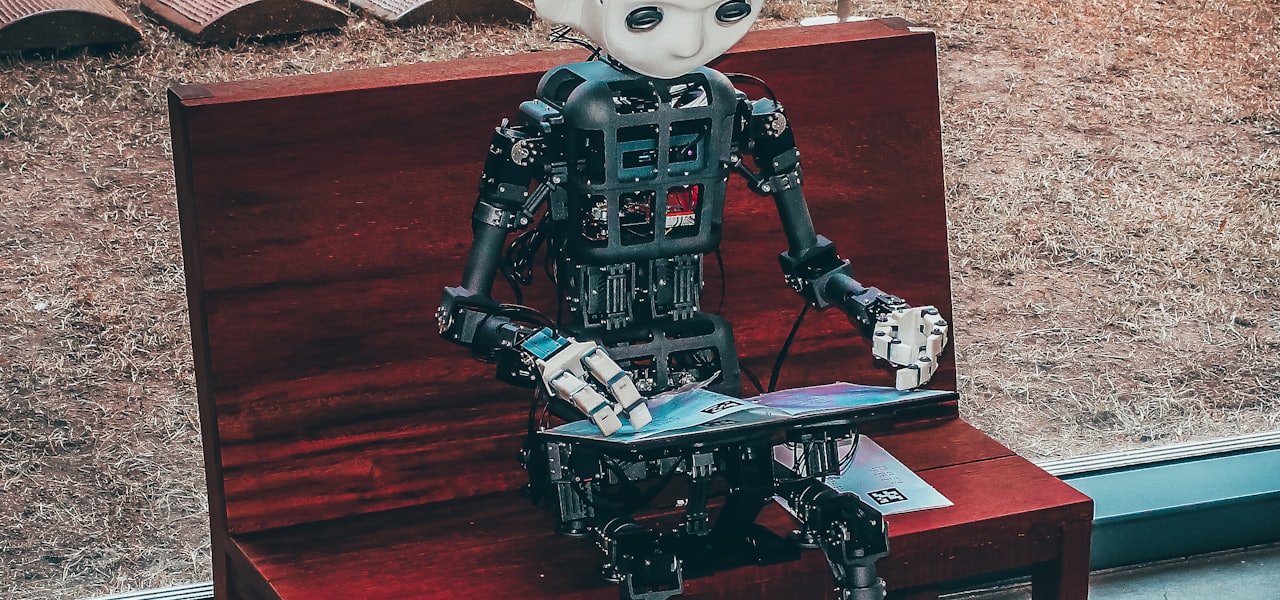
A language model is a computational model that predicts sequences in natural language. Language models are useful for a variety of tasks, including speech recognition, machine translation, natural language generation (generating more human-like text), optical character recognition, route optimization, handwriting recognition, grammar induction, information retrieval and disaster response. Large language models (LLMs), currently their most advanced form as of 2026, are predominantly based on transformers trained on larger datasets (frequently using texts scraped from the public internet). They have superseded recurrent neural network-based models, which had previously superseded the purely statistical models, such as the word n-gram language model. == History == Noam Chomsky did pioneering work on language models in the 1950s by developing a theory of formal grammars. In 1980, statistical approaches were explored and found to be more useful for many purposes than rule-based formal grammars. Discrete representations like word n-gram language models, with probabilities for discrete combinations of words, made significant advances. In the 2000s, continuous representations for words, such as word embeddings, began to replace discrete representations. Typically, the representation is a real-valued vector that encodes a word’s meaning such that words closer in vector space are similar in meaning and common relationships between words, such as plurality or gender, are preserved. == Pure statistical models == In 1980, the first significant statistical language model was proposed, and during the decade IBM performed 'Shannon-style' experiments, in which potential sources for language modeling improvement were identified by observing and analyzing the performance of human subjects in predicting or correcting text. === Models based on word n-grams === === Exponential === Maximum entropy language models encode the relationship between a word and the n-gram history using feature functions. The equation is P ( w m ∣ w 1 , … , w m − 1 ) = 1 Z ( w 1 , … , w m − 1 ) exp ( a T f ( w 1 , … , w m ) ) {\displaystyle P(w_{m}\mid w_{1},\ldots ,w_{m-1})={\frac {1}{Z(w_{1},\ldots ,w_{m-1})}}\exp(a^{T}f(w_{1},\ldots ,w_{m}))} where Z ( w 1 , … , w m − 1 ) {\displaystyle Z(w_{1},\ldots ,w_{m-1})} is the partition function, a {\displaystyle a} is the parameter vector, and f ( w 1 , … , w m ) {\displaystyle f(w_{1},\ldots ,w_{m})} is the feature function. In the simplest case, the feature function is just an indicator of the presence of a certain n-gram. It is helpful to use a prior on a {\displaystyle a} or some form of regularization. The log-bilinear model is another example of an exponential language model. === Skip-gram model === == Neural models == === Recurrent neural network === Continuous representations or embeddings of words are produced in recurrent neural network-based language models (known also as continuous space language models). Such continuous space embeddings help to alleviate the curse of dimensionality, which is the consequence of the number of possible sequences of words increasing exponentially with the size of the vocabulary, further causing a data sparsity problem. Neural networks avoid this problem by representing words as non-linear combinations of weights in a neural net. === Large language models === Although sometimes matching human performance, it is not clear whether they are plausible cognitive models. At least for recurrent neural networks, it has been shown that they sometimes learn patterns that humans do not, but fail to learn patterns that humans typically do. == Evaluation and benchmarks == Evaluation of the quality of language models is mostly done by comparison to human created sample benchmarks created from typical language-oriented tasks. Other, less established, quality tests examine the intrinsic character of a language model or compare two such models. Since language models are typically intended to be dynamic and to learn from data they see, some proposed models investigate the rate of learning, e.g., through inspection of learning curves. Various data sets have been developed for use in evaluating language processing systems. These include: Massive Multitask Language Understanding (MMLU) Corpus of Linguistic Acceptability GLUE benchmark Microsoft Research Paraphrase Corpus Multi-Genre Natural Language Inference Question Natural Language Inference Quora Question Pairs Recognizing Textual Entailment Semantic Textual Similarity Benchmark SQuAD question answering Test Stanford Sentiment Treebank Winograd NLI BoolQ, PIQA, SIQA, HellaSwag, WinoGrande, ARC, OpenBookQA, NaturalQuestions, TriviaQA, RACE, BIG-bench hard, GSM8k, RealToxicityPrompts, WinoGender, CrowS-Pairs
Apache ORC
Apache ORC (Optimized Row Columnar) is a free and open-source column-oriented data storage format. It is similar to the other columnar-storage file formats available in the Hadoop ecosystem such as RCFile and Parquet. It is used by most of the data processing frameworks Apache Spark, Apache Hive, Apache Flink, and Apache Hadoop. In February 2013, the Optimized Row Columnar (ORC) file format was announced by Hortonworks in collaboration with Facebook. A calendar month later, the Apache Parquet format was announced, developed by Cloudera and Twitter. Apache ORC format is widely supported including Amazon Web Services' Glue,Google Cloud Platform's BigQuery, and Pandas (software). == History ==
Concordancer
A concordancer is a computer program that automatically constructs a concordance—an alphabetised index of every occurrence of a word or phrase in a body of text, each entry displayed with its surrounding context. Concordancers are primary tools in corpus linguistics, lexicography, computer-assisted translation, and language teaching. The most common display format is the key word in context (KWIC) layout, in which each hit appears centred on a line with a fixed span of words to its left and right, enabling rapid scanning of usage patterns across many occurrences. == History == === Pre-computational concordances === The compilation of concordances predates computers by many centuries. Around 1230, the French Dominican cardinal Hugh of Saint-Cher directed a team of friars in assembling a concordance of the Latin Vulgate Bible, generally regarded as the first systematic concordance of any text. To help readers locate passages, Hugh divided each biblical chapter into lettered sections. Later milestones include a Hebrew Old Testament concordance compiled by Rabbi Mordecai Nathan (1448), Alexander Cruden's Complete Concordance to the Holy Scriptures (1737), and the manuscript Asaf ha-Mazkir, an unfinished concordance to the Babylonian Talmud compiled by Moses Rigotz around the turn of the 19th century. === First computer concordance === The first concordance produced with computing assistance was the Index Thomisticus, a comprehensive lexical index of the writings of and around Thomas Aquinas, totalling approximately 10.6 million Latin words. The Italian Jesuit priest Roberto Busa conceived the project in 1946 and secured the sponsorship of IBM in 1949 after a meeting with chairman Thomas J. Watson. Keypunch operators in Gallarate, Italy, encoded the texts onto punched cards from around 1950. IBM executive Paul Tasman developed the processing methods. The full 56-volume printed edition was completed around 1980, followed by a CD-ROM edition in 1989 and a web-accessible version in 2005. === The KWIC format === The key word in context (KWIC) display was formalised as a computational technique by Hans Peter Luhn, a researcher at IBM, in a 1960 paper in American Documentation. In KWIC output, each instance of the search term (the node word) is centred on a line with a fixed window of words to each side; sorting the resulting lines alphabetically by the immediately adjacent word reveals collocational and phraseological patterns at a glance. === COCOA === One of the first dedicated concordancing programs was COCOA (COunt and COncordance Generation on Atlas), created in 1965 by D. B. Russell at University College London and the Atlas Computer Laboratory in Harwell, Oxfordshire. Written in approximately 4,000 cards of FORTRAN, it processed text annotated with flat, non-hierarchical markup tags and could produce word counts and concordances in multiple languages. Within its first six months COCOA had been applied to texts in at least six languages. A second version designed for multiple mainframe platforms was distributed to British computing centres in the mid-1970s. Growing dissatisfaction with its interface and the eventual withdrawal of Atlas Laboratory support prompted British funding bodies to commission a successor program. === Oxford Concordance Program === The Oxford Concordance Program (OCP) was designed and written in FORTRAN by Susan Hockey and Ian Marriott at Oxford University Computing Services (OUCS) between 1979 and 1980 and first released in 1981. Hockey and Marriott acknowledged that OCP owed much to COCOA and the CLOC system at the University of Birmingham. OCP accepted COCOA-format markup to encode metadata such as author, act, scene, and line number, and was described by its authors as "a machine-independent text analysis program for producing word lists, indices and concordances in a variety of languages and alphabets." By the mid-1980s it had been licensed to approximately 240 institutions in 23 countries. A personal computer version, Micro-OCP, was developed for the IBM PC and sold by Oxford University Press from the late 1980s. Version 2 was rewritten in 1985–86 and documented in the same 1987 article by Hockey and co-author John Martin. === Personal computer era === The availability of affordable personal computers in the 1980s and 1990s enabled standalone concordancing applications that analysts could run locally without specialist computing facilities. MicroConcord, developed by Mike Scott and Tim Johns and published by Oxford University Press in 1993 for MS-DOS, was among the first concordancers designed specifically for classroom language teaching. WordSmith Tools, also developed by Mike Scott, was first released in 1996 and became one of the most widely used corpus analysis suites in academic linguistics research. Other tools from this era include TACT (University of Toronto, 1989), a suite of MS-DOS freeware programs for literary text analysis, and MonoConc, a Windows concordancer created by Michael Barlow. === Web-based concordancers === From the late 1990s onwards, web-based concordancers hosted on remote servers gave researchers browser access to large preloaded corpora without requiring local storage or processing. The Sketch Engine, developed by Adam Kilgarriff and Pavel Rychlý (Masaryk University), was launched commercially in July 2003 by Lexical Computing Limited and introduced word sketches—automatically generated one-page profiles of a word's typical grammatical relations and collocations. AntConc, created by Laurence Anthony at Waseda University, Tokyo, was first released in 2002 as freeware for Windows, macOS, and Linux. == Features == Modern concordancers typically offer a range of analytical functions beyond basic KWIC display. These commonly include: KWIC display with the node word centred and context words in aligned columns, sortable by the word one, two, or three positions to the left or right of the node (L1–L3 and R1–R3) Concordance plots, visualising the distribution of hits as marks along a scaled bar representing each text in the corpus Frequency and word lists, both alphabetical and ranked by frequency Collocation statistics, identifying words that co-occur with the search term more often than chance, quantified by measures such as mutual information, the t-score, or log-likelihood Keyword analysis, comparing word frequencies between a study corpus and a reference corpus to identify statistically distinctive items N-gram analysis, finding frequently recurring word sequences of a specified length Part-of-speech tagging integration, allowing searches filtered to particular grammatical categories Unicode support for multilingual text Bilingual and parallel concordancers additionally display aligned text in two or more languages side by side, enabling comparison of translation equivalents across language pairs. == Notable concordancers == === WordSmith Tools === Created by Mike Scott and first released in 1996, WordSmith Tools is a Windows corpus analysis suite that evolved from MicroConcord. Its three core modules are Concord (KWIC concordances), WordList (frequency and alphabetical word lists), and Keywords (statistical keyword identification relative to a reference corpus). Oxford University Press used WordSmith Tools for dictionary preparation work. Version 4.0 is freely available; later versions are sold by Lexical Analysis Software Limited. === AntConc === AntConc is a freeware, multiplatform concordancing toolkit created by Laurence Anthony, Professor of Applied Linguistics at Waseda University, Tokyo. First released in 2002 and formally described in a 2005 academic paper, it runs on Windows, macOS, and Linux. Its tools include a KWIC concordancer, a concordance plot for visualising distribution across texts, a collocates tool, a keyword list, and an n-gram analysis module. Because it is free and requires only plain text files, AntConc is widely used in linguistics courses and independent research worldwide. === Sketch Engine === The Sketch Engine is a corpus management and query system co-created by Adam Kilgarriff and Pavel Rychlý and launched in 2003 by Lexical Computing Limited. It provides browser-based access to over 800 corpora in more than 100 languages. Beyond concordance searching, it offers word sketches, collocation analysis, distributional thesaurus construction, keyword and terminology extraction, and diachronic analysis. It is used by major publishers including Macmillan and Oxford University Press for lexicographic research. A subset tool, SKELL (Sketch Engine for Language Learning), is freely accessible to individual learners. === Wmatrix === Wmatrix is a web-based corpus processing environment developed by Paul Rayson at the University Centre for Computer Corpus Research on Language (UCREL), Lancaster University. Alongside concordances and frequency lists, Wmatrix integrates CLAWS part-of-speech tagging and the USAS semantic tagger, enabling keyword analysis simultane
Grammar checker
A grammar checker, in computing terms, is a program, or part of a program, that attempts to verify written text for grammatical correctness. Grammar checkers are most often implemented as a feature of a larger program, such as a word processor, but are also available as a stand-alone application that can be activated from within programs that work with editable text. The implementation of a grammar checker makes use of natural language processing. == History == The earliest "grammar checkers" were programs that checked for punctuation and style inconsistencies, rather than a complete range of possible grammatical errors. The first system was called Writer's Workbench, and was a set of writing tools included with Unix systems as far back as the 1970s. The whole Writer's Workbench package included several separate tools to check for various writing problems. The "diction" tool checked for wordy, trite, clichéd or misused phrases in a text. The tool would output a list of questionable phrases and provide suggestions for improving the writing. The "style" tool analyzed the writing style of a given text. It performed a number of readability tests on the text and output the results, and gave some statistical information about the sentences of the text. Aspen Software of Albuquerque, New Mexico released the earliest version of a diction and style checker for personal computers, Grammatik, in 1981. Grammatik was first available for a Radio Shack - TRS-80, and soon had versions for CP/M and the IBM PC. Reference Software International of San Francisco, California, acquired Grammatik in 1985. Development of Grammatik continued, and it became an actual grammar checker that could detect writing errors beyond simple style checking. Other early diction and style checking programs included Punctuation & Style, Correct Grammar, RightWriter and PowerEdit. While all the earliest programs started as simple diction and style checkers, all eventually added various levels of language processing, and developed some level of true grammar checking capability. Until 1992, grammar checkers were sold as add-on programs. There were a large number of different word processing programs available at that time, with WordPerfect and Microsoft Word the top two in market share. In 1992, Microsoft decided to add grammar checking as a feature of Word, and licensed CorrecText, a grammar checker from Houghton Mifflin that had not yet been marketed as a standalone product. WordPerfect answered Microsoft's move by acquiring Reference Software, and the direct descendant of Grammatik is still included with WordPerfect. As of 2019, grammar checkers are built into systems like Google Docs, browser extensions like Grammarly and Qordoba, desktop applications like Ginger, free and open-source software like LanguageTool, and text editor plugins like those available from WebSpellChecker Software. == Technical issues == The earliest writing style programs checked for wordy, trite, clichéd, or misused phrases in a text. This process was based on simple pattern matching. The heart of the program was a list of many hundreds or thousands of phrases that are considered poor writing by many experts. The list of questionable phrases included alternative wording for each phrase. The checking program would simply break text into sentences, check for any matches in the phrase dictionary, flag suspect phrases and show an alternative. These programs could also perform some mechanical checks. For example, they would typically flag doubled words, doubled punctuation, some capitalization errors, and other simple mechanical mistakes. True grammar checking is more complex. While a programming language has a very specific syntax and grammar, this is not so for natural languages. One can write a somewhat complete formal grammar for a natural language, but there are usually so many exceptions in real usage that a formal grammar is of minimal help in writing a grammar checker. One of the most important parts of a natural language grammar checker is a dictionary of all the words in the language, along with the part of speech of each word. The fact that a natural word may be used as any one of several parts of speech (such as "free" being used as an adjective, adverb, noun, or verb) greatly increases the complexity of any grammar checker. A grammar checker will find each sentence in a text, look up each word in the dictionary, and then attempt to parse the sentence into a form that matches a grammar. Using various rules, the program can then detect various errors, such as agreement in tense, number, word order, and so on. It is also possible to detect some stylistic problems with the text. For example, some popular style guides such as The Elements of Style deprecate excessive use of the passive voice. Grammar checkers may attempt to identify passive sentences and suggest an active-voice alternative. The software elements required for grammar checking are closely related to some of the development issues that need to be addressed for speech recognition software. In voice recognition, parsing can be used to help predict which word is most likely intended, based on part of speech and position in the sentence. In grammar checking, the parsing is used to detect words that fail to follow accepted grammar usage. Recently, research has focused on developing algorithms which can recognize grammar errors based on the context of the surrounding words. == Criticism == Grammar checkers are considered a type of foreign language writing aid which non-native speakers can use to proofread their writings as such programs endeavor to identify syntactical errors. However, as with other computerized writing aids such as spell checkers, popular grammar checkers are often criticized when they fail to spot errors and incorrectly flag correct text as erroneous. The linguist Geoffrey K. Pullum argued in 2007 that they were generally so inaccurate as to do more harm than good: "for the most part, accepting the advice of a computer grammar checker on your prose will make it much worse, sometimes hilariously incoherent."
Text Retrieval Conference
The Text REtrieval Conference (TREC) is an ongoing series of workshops focusing on a list of different information retrieval (IR) research areas, or tracks. It is co-sponsored by the National Institute of Standards and Technology (NIST) and the Intelligence Advanced Research Projects Activity (part of the office of the Director of National Intelligence), and began in 1992 as part of the TIPSTER Text program. Its purpose is to support and encourage research within the information retrieval community by providing the infrastructure necessary for large-scale evaluation of text retrieval methodologies and to increase the speed of lab-to-product transfer of technology. TREC's evaluation protocols have improved many search technologies. A 2010 study estimated that "without TREC, U.S. Internet users would have spent up to 3.15 billion additional hours using web search engines between 1999 and 2009." Hal Varian the Chief Economist at Google wrote that "The TREC data revitalized research on information retrieval. Having a standard, widely available, and carefully constructed set of data laid the groundwork for further innovation in this field." Each track has a challenge wherein NIST provides participating groups with data sets and test problems. Depending on track, test problems might be questions, topics, or target extractable features. Uniform scoring is performed so the systems can be fairly evaluated. After evaluation of the results, a workshop provides a place for participants to collect together thoughts and ideas and present current and future research work.Text Retrieval Conference started in 1992, funded by DARPA (US Defense Advanced Research Project) and run by NIST. Its purpose was to support research within the information retrieval community by providing the infrastructure necessary for large-scale evaluation of text retrieval methodologies. == Goals == Encourage retrieval search based on large text collections Increase communication among industry, academia, and government by creating an open forum for the exchange of research ideas Speed the transfer of technology from research labs into commercial products by demonstrating substantial improvements retrieval methodologies on real world problems To increase the availability of appropriate evaluation techniques for use by industry and academia including development of new evaluation techniques more applicable to current systems TREC is overseen by a program committee consisting of representatives from government, industry, and academia. For each TREC, NIST provide a set of documents and questions. Participants run their own retrieval system on the data and return to NIST a list of retrieved top-ranked documents. NIST pools the individual result judges the retrieved documents for correctness and evaluates the results. The TREC cycle ends with a workshop that is a forum for participants to share their experiences. == Relevance judgments in TREC == TREC defines relevance as: "If you were writing a report on the subject of the topic and would use the information contained in the document in the report, then the document is relevant." Most TREC retrieval tasks use binary relevance: a document is either relevant or not relevant. Some TREC tasks use graded relevance, capturing multiple degrees of relevance. Most TREC collections are too large to perform complete relevance assessment; for these collections it is impossible to calculate the absolute recall for each query. To decide which documents to assess, TREC usually uses a method call pooling. In this method, the top-ranked n documents from each contributing run are aggregated, and the resulting document set is judged completely. == Various TRECs == In 1992 TREC-1 was held at NIST. The first conference attracted 28 groups of researchers from academia and industry. It demonstrated a wide range of different approaches to the retrieval of text from large document collections .Finally TREC1 revealed the facts that automatic construction of queries from natural language query statements seems to work. Techniques based on natural language processing were no better no worse than those based on vector or probabilistic approach. TREC2 Took place in August 1993. 31 group of researchers participated in this. Two types of retrieval were examined. Retrieval using an ‘ad hoc’ query and retrieval using a ‘routing' query In TREC-3 a small group experiments worked with Spanish language collection and others dealt with interactive query formulation in multiple databases TREC-4 they made even shorter to investigate the problems with very short user statements TREC-5 includes both short and long versions of the topics with the goal of carrying out deeper investigation into which types of techniques work well on various lengths of topics In TREC-6 Three new tracks speech, cross language, high precision information retrieval were introduced. The goal of cross language information retrieval is to facilitate research on system that are able to retrieve relevant document regardless of language of the source document TREC-7 contained seven tracks out of which two were new Query track and very large corpus track. The goal of the query track was to create a large query collection TREC-8 contain seven tracks out of which two –question answering and web tracks were new. The objective of QA query is to explore the possibilities of providing answers to specific natural language queries TREC-9 Includes seven tracks In TREC-10 Video tracks introduced Video tracks design to promote research in content based retrieval from digital video In TREC-11 Novelty tracks introduced. The goal of novelty track is to investigate systems abilities to locate relevant and new information within the ranked set of documents returned by a traditional document retrieval system TREC-12 held in 2003 added three new tracks; Genome track, robust retrieval track, HARD (Highly Accurate Retrieval from Documents) == Tracks == === Current tracks === New tracks are added as new research needs are identified, this list is current for TREC 2018. CENTRE Track – Goal: run in parallel CLEF 2018, NTCIR-14, TREC 2018 to develop and tune an IR reproducibility evaluation protocol (new track for 2018). Common Core Track – Goal: an ad hoc search task over news documents. Complex Answer Retrieval (CAR) – Goal: to develop systems capable of answering complex information needs by collating information from an entire corpus. Incident Streams Track – Goal: to research technologies to automatically process social media streams during emergency situations (new track for TREC 2018). The News Track – Goal: partnership with The Washington Post to develop test collections in news environment (new for 2018). Precision Medicine Track – Goal: a specialization of the Clinical Decision Support track to focus on linking oncology patient data to clinical trials. Real-Time Summarization Track (RTS) – Goal: to explore techniques for real-time update summaries from social media streams. === Past tracks === Chemical Track – Goal: to develop and evaluate technology for large scale search in chemistry-related documents, including academic papers and patents, to better meet the needs of professional searchers, and specifically patent searchers and chemists. Clinical Decision Support Track – Goal: to investigate techniques for linking medical cases to information relevant for patient care Contextual Suggestion Track – Goal: to investigate search techniques for complex information needs that are highly dependent on context and user interests. Crowdsourcing Track – Goal: to provide a collaborative venue for exploring crowdsourcing methods both for evaluating search and for performing search tasks. Genomics Track – Goal: to study the retrieval of genomic data, not just gene sequences but also supporting documentation such as research papers, lab reports, etc. Last ran on TREC 2007. Dynamic Domain Track – Goal: to investigate domain-specific search algorithms that adapt to the dynamic information needs of professional users as they explore in complex domains. Enterprise Track – Goal: to study search over the data of an organization to complete some task. Last ran on TREC 2008. Entity Track – Goal: to perform entity-related search on Web data. These search tasks (such as finding entities and properties of entities) address common information needs that are not that well modeled as ad hoc document search. Cross-Language Track – Goal: to investigate the ability of retrieval systems to find documents topically regardless of source language. After 1999, this track spun off into CLEF. FedWeb Track – Goal: to select best resources to forward a query to, and merge the results so that most relevant are on the top. Federated Web Search Track – Goal: to investigate techniques for the selection and combination of search results from a large number of real on-line web search services. Filtering Track – Goal: to binarily decide retrieval of new
Smart environment
Smart environments link computers and other smart devices to everyday settings and tasks. Smart environments include smart homes, smart cities, and smart manufacturing. == Introduction == Smart environments are an extension of pervasive computing. According to Mark Weiser, pervasive computing promotes the idea of a world that is connected to sensors and computers. These sensors and computers are integrated with everyday objects in peoples' lives and are connected through networks. == Definition == Cook and Das, define a smart environment as "a small world where different kinds of smart devices are continuously working to make inhabitants' lives more comfortable." Smart environments aim to satisfy the experience of individuals from every environment, by replacing hazardous work, physical labor, and repetitive tasks with automated agents. Poslad differentiates three different kinds of smart environments for systems, services, and devices: virtual (or distributed) computing environments, physical environments, and human environments, or a hybrid combination of these: Virtual computing environments enable smart devices to access pertinent services anywhere and anytime. Physical environments may be embedded with various smart devices of different types including tags, sensors, and controllers, and have different form factors ranging from nano- to micro- to macro-sized. Human environments: humans, either individually or collectively, inherently form a smart environment for devices. However, humans themselves may be accompanied by smart devices such as mobile phones, use surface-mounted devices (wearable computing), and contain embedded devices (e.g., pacemakers to maintain a healthy heart operation or AR contact lenses) == Features == Smart environments encompass a range of features and services across various domains, including smart homes, smart cities, smart health, and smart factories. Some of the key features of smart environments are: Sensors and Actuators: Smart environments are equipped with an assembly of sensors and actuators that collect data and initiate actions to provide services for the betterment of human life. Interconnected Systems: These environments consist of interconnected systems that enable seamless communication and coordination among various devices and components. Data-Driven Technologies: Smart environments leverage data-driven technologies, such as the Internet of Things (IoT), to obtain information from the physical world, process it, and perform actions accordingly. Efficiency and Sustainability: They are designed to improve efficiency, sustainable practices, and resource management across different settings, such as energy efficiency in smart homes and environmental quality management in smart cities. Diverse Requirements: Different types of smart environments have diverse requirements and technology choices, influencing the processing and utilization of data within a specific environment. == Technologies == Building a smart environment involves technologies of Wireless communication Algorithm design, signal prediction & classification, information theory Multilayered software architecture, Corba, middleware Speech recognition Image processing, image recognition Sensors design, calibration, motion detection, temperature, pressure sensors, accelerometers Semantic Web and knowledge graphs Adaptive control, Kalman filters Computer networking Parallel processing Operating systems == Existing projects == The Aware Home Research Initiative at Georgia Tech "is devoted to the multidisciplinary exploration of emerging technologies and services based in the home" and was launched in 1998 as one of the first "living laboratories." The Mav Home (Managing an Adaptive Versatile Home) project, at UT Arlington, is a smart environment-lab with state-of-the-art algorithms and protocols used to provide a customized, personal environment to the users of this space. The Mav Home project, in addition to providing a safe environment, wants to reduce the energy consumption of the inhabitants. Other projects include House at the MIT Media Lab and many others.
Text Retrieval Conference
The Text REtrieval Conference (TREC) is an ongoing series of workshops focusing on a list of different information retrieval (IR) research areas, or tracks. It is co-sponsored by the National Institute of Standards and Technology (NIST) and the Intelligence Advanced Research Projects Activity (part of the office of the Director of National Intelligence), and began in 1992 as part of the TIPSTER Text program. Its purpose is to support and encourage research within the information retrieval community by providing the infrastructure necessary for large-scale evaluation of text retrieval methodologies and to increase the speed of lab-to-product transfer of technology. TREC's evaluation protocols have improved many search technologies. A 2010 study estimated that "without TREC, U.S. Internet users would have spent up to 3.15 billion additional hours using web search engines between 1999 and 2009." Hal Varian the Chief Economist at Google wrote that "The TREC data revitalized research on information retrieval. Having a standard, widely available, and carefully constructed set of data laid the groundwork for further innovation in this field." Each track has a challenge wherein NIST provides participating groups with data sets and test problems. Depending on track, test problems might be questions, topics, or target extractable features. Uniform scoring is performed so the systems can be fairly evaluated. After evaluation of the results, a workshop provides a place for participants to collect together thoughts and ideas and present current and future research work.Text Retrieval Conference started in 1992, funded by DARPA (US Defense Advanced Research Project) and run by NIST. Its purpose was to support research within the information retrieval community by providing the infrastructure necessary for large-scale evaluation of text retrieval methodologies. == Goals == Encourage retrieval search based on large text collections Increase communication among industry, academia, and government by creating an open forum for the exchange of research ideas Speed the transfer of technology from research labs into commercial products by demonstrating substantial improvements retrieval methodologies on real world problems To increase the availability of appropriate evaluation techniques for use by industry and academia including development of new evaluation techniques more applicable to current systems TREC is overseen by a program committee consisting of representatives from government, industry, and academia. For each TREC, NIST provide a set of documents and questions. Participants run their own retrieval system on the data and return to NIST a list of retrieved top-ranked documents. NIST pools the individual result judges the retrieved documents for correctness and evaluates the results. The TREC cycle ends with a workshop that is a forum for participants to share their experiences. == Relevance judgments in TREC == TREC defines relevance as: "If you were writing a report on the subject of the topic and would use the information contained in the document in the report, then the document is relevant." Most TREC retrieval tasks use binary relevance: a document is either relevant or not relevant. Some TREC tasks use graded relevance, capturing multiple degrees of relevance. Most TREC collections are too large to perform complete relevance assessment; for these collections it is impossible to calculate the absolute recall for each query. To decide which documents to assess, TREC usually uses a method call pooling. In this method, the top-ranked n documents from each contributing run are aggregated, and the resulting document set is judged completely. == Various TRECs == In 1992 TREC-1 was held at NIST. The first conference attracted 28 groups of researchers from academia and industry. It demonstrated a wide range of different approaches to the retrieval of text from large document collections .Finally TREC1 revealed the facts that automatic construction of queries from natural language query statements seems to work. Techniques based on natural language processing were no better no worse than those based on vector or probabilistic approach. TREC2 Took place in August 1993. 31 group of researchers participated in this. Two types of retrieval were examined. Retrieval using an ‘ad hoc’ query and retrieval using a ‘routing' query In TREC-3 a small group experiments worked with Spanish language collection and others dealt with interactive query formulation in multiple databases TREC-4 they made even shorter to investigate the problems with very short user statements TREC-5 includes both short and long versions of the topics with the goal of carrying out deeper investigation into which types of techniques work well on various lengths of topics In TREC-6 Three new tracks speech, cross language, high precision information retrieval were introduced. The goal of cross language information retrieval is to facilitate research on system that are able to retrieve relevant document regardless of language of the source document TREC-7 contained seven tracks out of which two were new Query track and very large corpus track. The goal of the query track was to create a large query collection TREC-8 contain seven tracks out of which two –question answering and web tracks were new. The objective of QA query is to explore the possibilities of providing answers to specific natural language queries TREC-9 Includes seven tracks In TREC-10 Video tracks introduced Video tracks design to promote research in content based retrieval from digital video In TREC-11 Novelty tracks introduced. The goal of novelty track is to investigate systems abilities to locate relevant and new information within the ranked set of documents returned by a traditional document retrieval system TREC-12 held in 2003 added three new tracks; Genome track, robust retrieval track, HARD (Highly Accurate Retrieval from Documents) == Tracks == === Current tracks === New tracks are added as new research needs are identified, this list is current for TREC 2018. CENTRE Track – Goal: run in parallel CLEF 2018, NTCIR-14, TREC 2018 to develop and tune an IR reproducibility evaluation protocol (new track for 2018). Common Core Track – Goal: an ad hoc search task over news documents. Complex Answer Retrieval (CAR) – Goal: to develop systems capable of answering complex information needs by collating information from an entire corpus. Incident Streams Track – Goal: to research technologies to automatically process social media streams during emergency situations (new track for TREC 2018). The News Track – Goal: partnership with The Washington Post to develop test collections in news environment (new for 2018). Precision Medicine Track – Goal: a specialization of the Clinical Decision Support track to focus on linking oncology patient data to clinical trials. Real-Time Summarization Track (RTS) – Goal: to explore techniques for real-time update summaries from social media streams. === Past tracks === Chemical Track – Goal: to develop and evaluate technology for large scale search in chemistry-related documents, including academic papers and patents, to better meet the needs of professional searchers, and specifically patent searchers and chemists. Clinical Decision Support Track – Goal: to investigate techniques for linking medical cases to information relevant for patient care Contextual Suggestion Track – Goal: to investigate search techniques for complex information needs that are highly dependent on context and user interests. Crowdsourcing Track – Goal: to provide a collaborative venue for exploring crowdsourcing methods both for evaluating search and for performing search tasks. Genomics Track – Goal: to study the retrieval of genomic data, not just gene sequences but also supporting documentation such as research papers, lab reports, etc. Last ran on TREC 2007. Dynamic Domain Track – Goal: to investigate domain-specific search algorithms that adapt to the dynamic information needs of professional users as they explore in complex domains. Enterprise Track – Goal: to study search over the data of an organization to complete some task. Last ran on TREC 2008. Entity Track – Goal: to perform entity-related search on Web data. These search tasks (such as finding entities and properties of entities) address common information needs that are not that well modeled as ad hoc document search. Cross-Language Track – Goal: to investigate the ability of retrieval systems to find documents topically regardless of source language. After 1999, this track spun off into CLEF. FedWeb Track – Goal: to select best resources to forward a query to, and merge the results so that most relevant are on the top. Federated Web Search Track – Goal: to investigate techniques for the selection and combination of search results from a large number of real on-line web search services. Filtering Track – Goal: to binarily decide retrieval of new